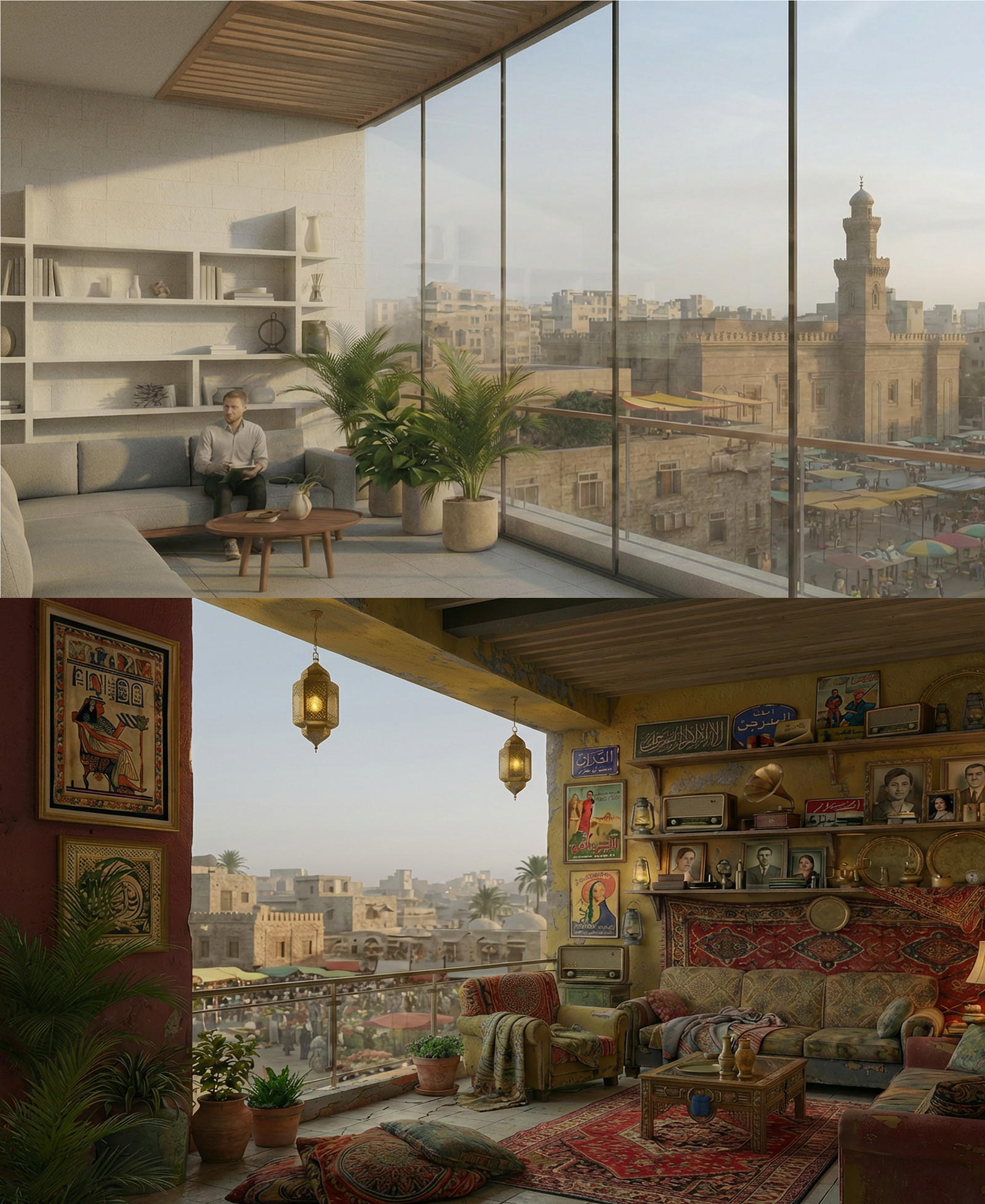
Dual Residency


Idea projektu
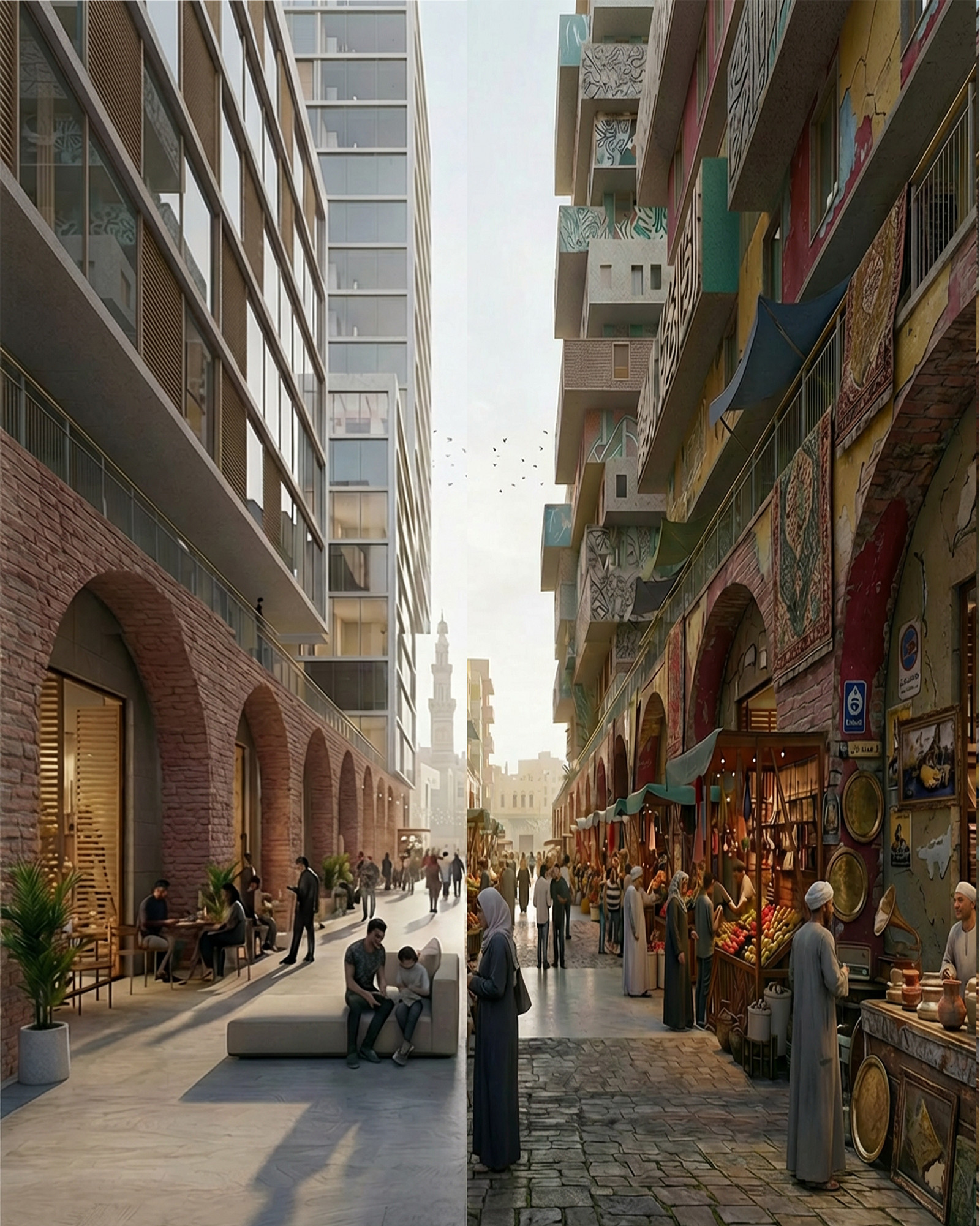
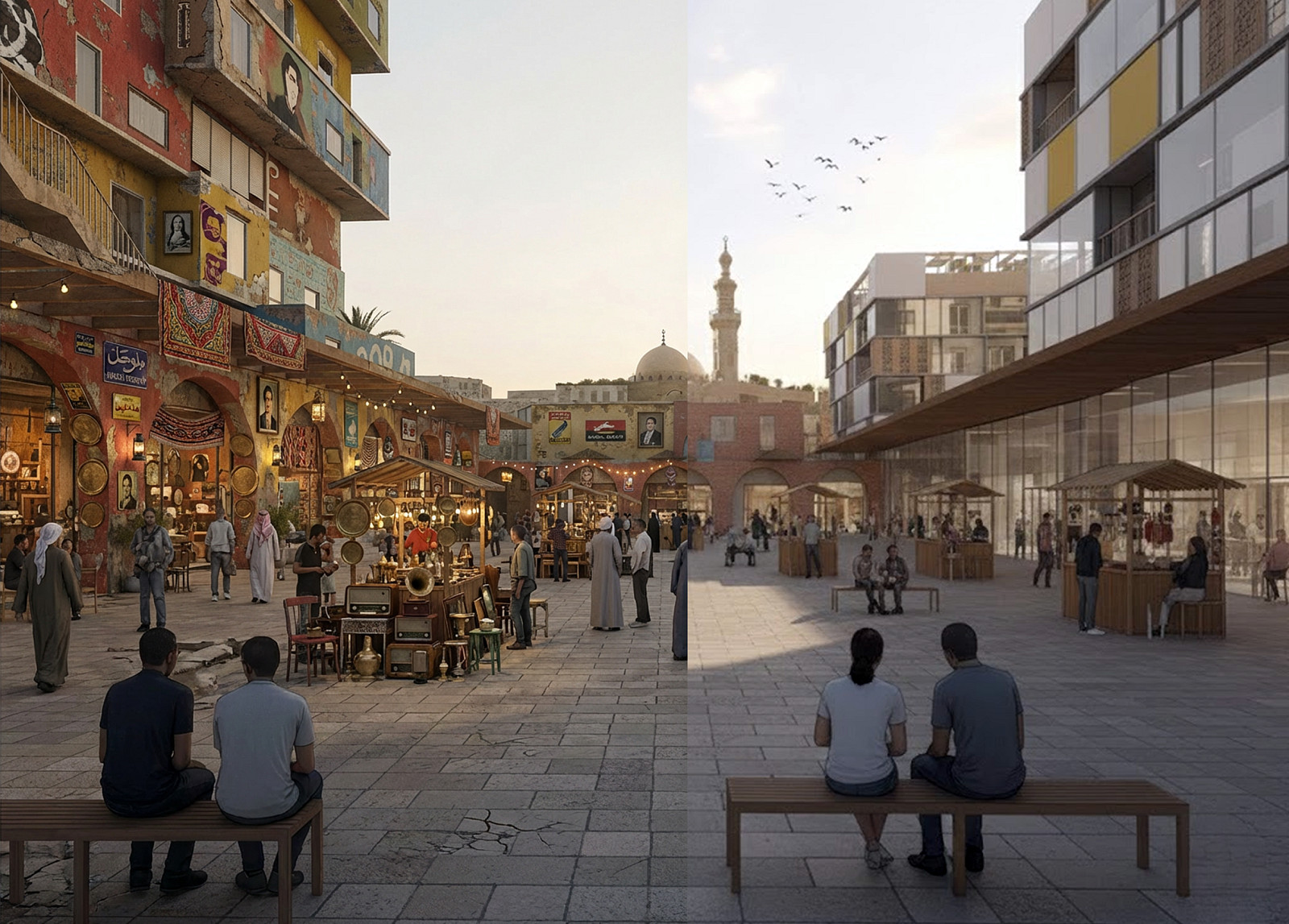
The project explores that Cairo has never resolved its contradictions; Modernity and informality, control and spontaneity, monumentality and everyday life that coexist as two parallel systems. Introducing the acceptance the presence of these two extreme opposites, narrowing their gap and emphasizing their ability to coexist, allowing them to be seen as complementary not contradictory.
Popis projektu
The Bipolarism Housing Complex translate this into architecture that can mediate between two urban realities that already exist in Cairo:
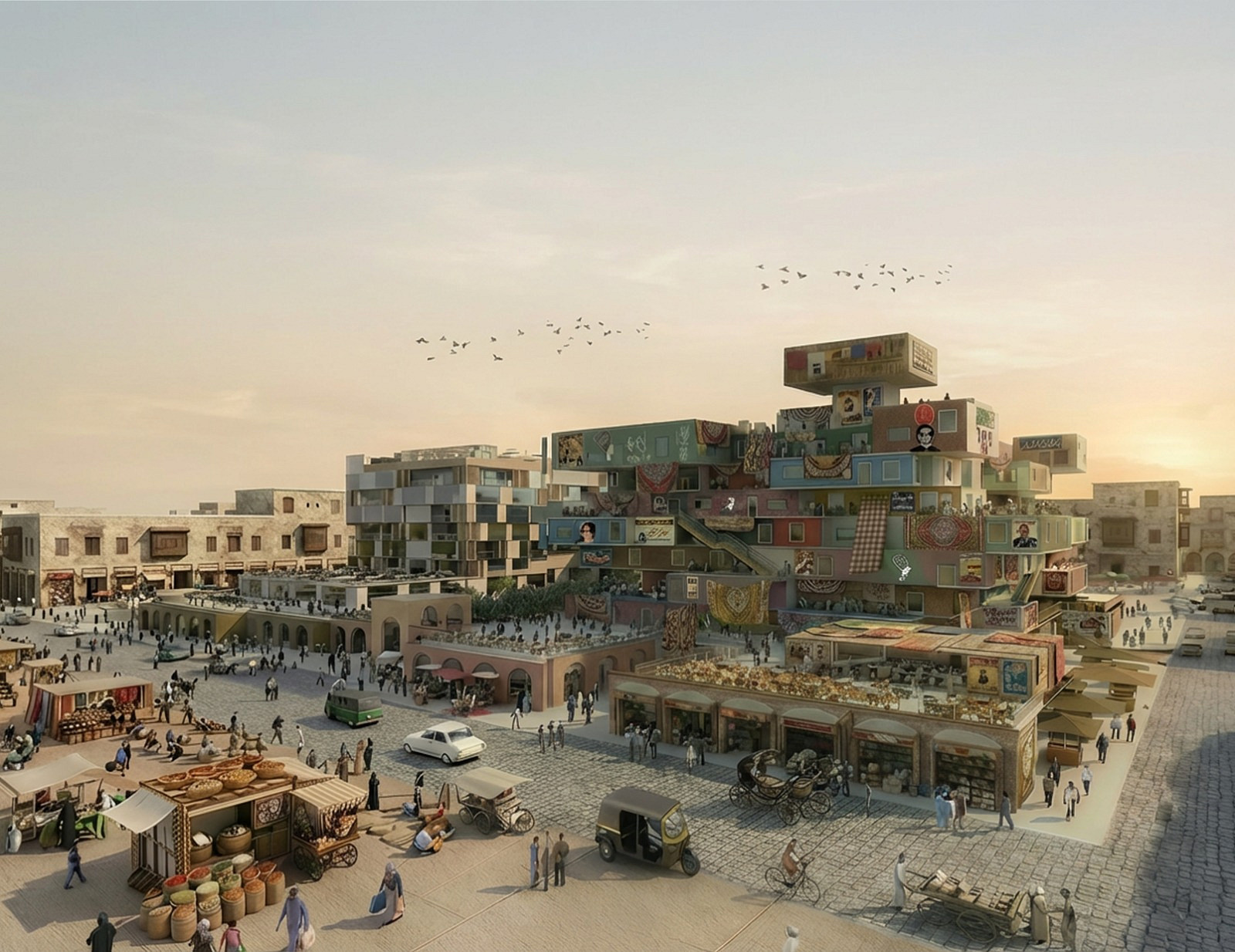
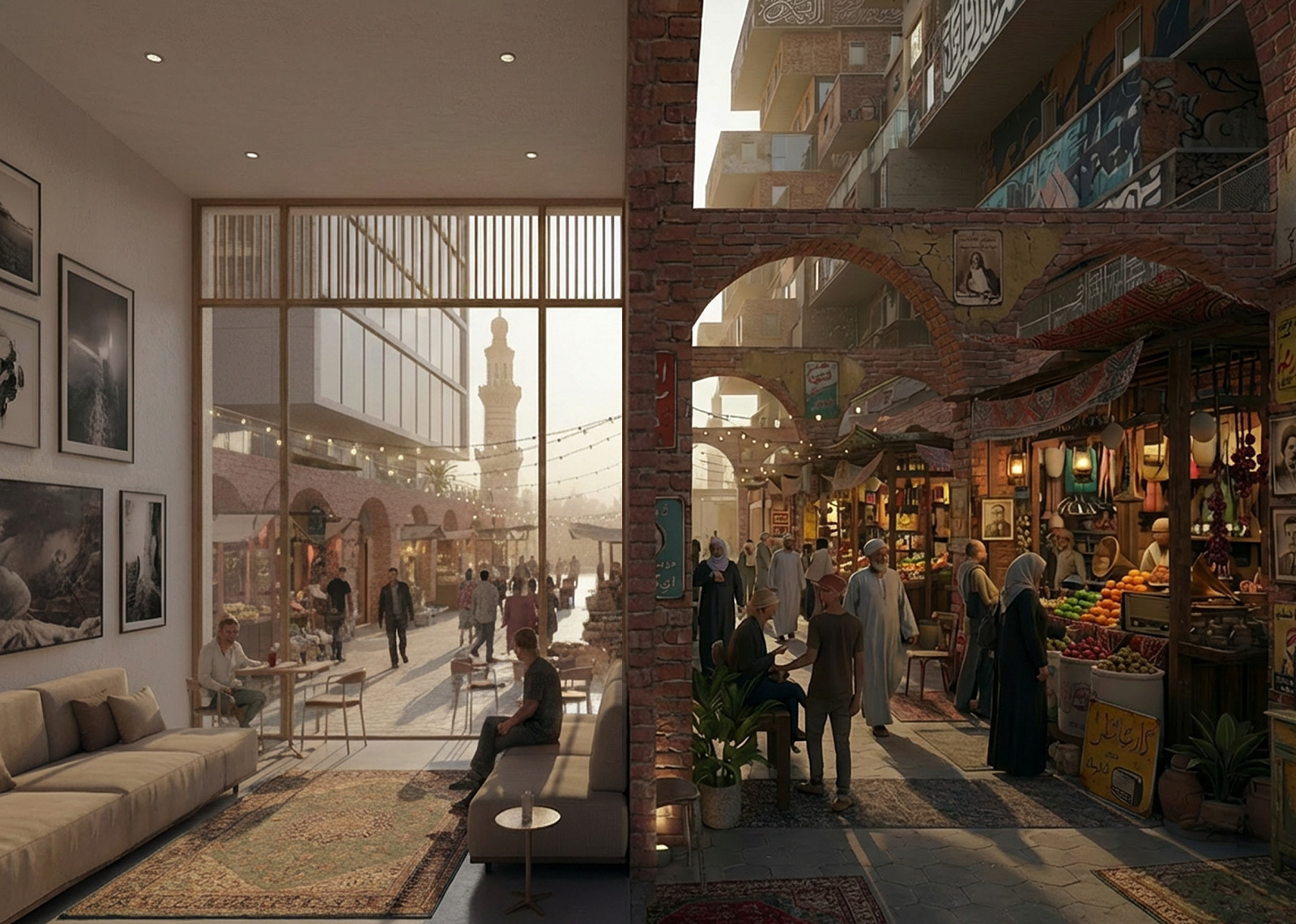
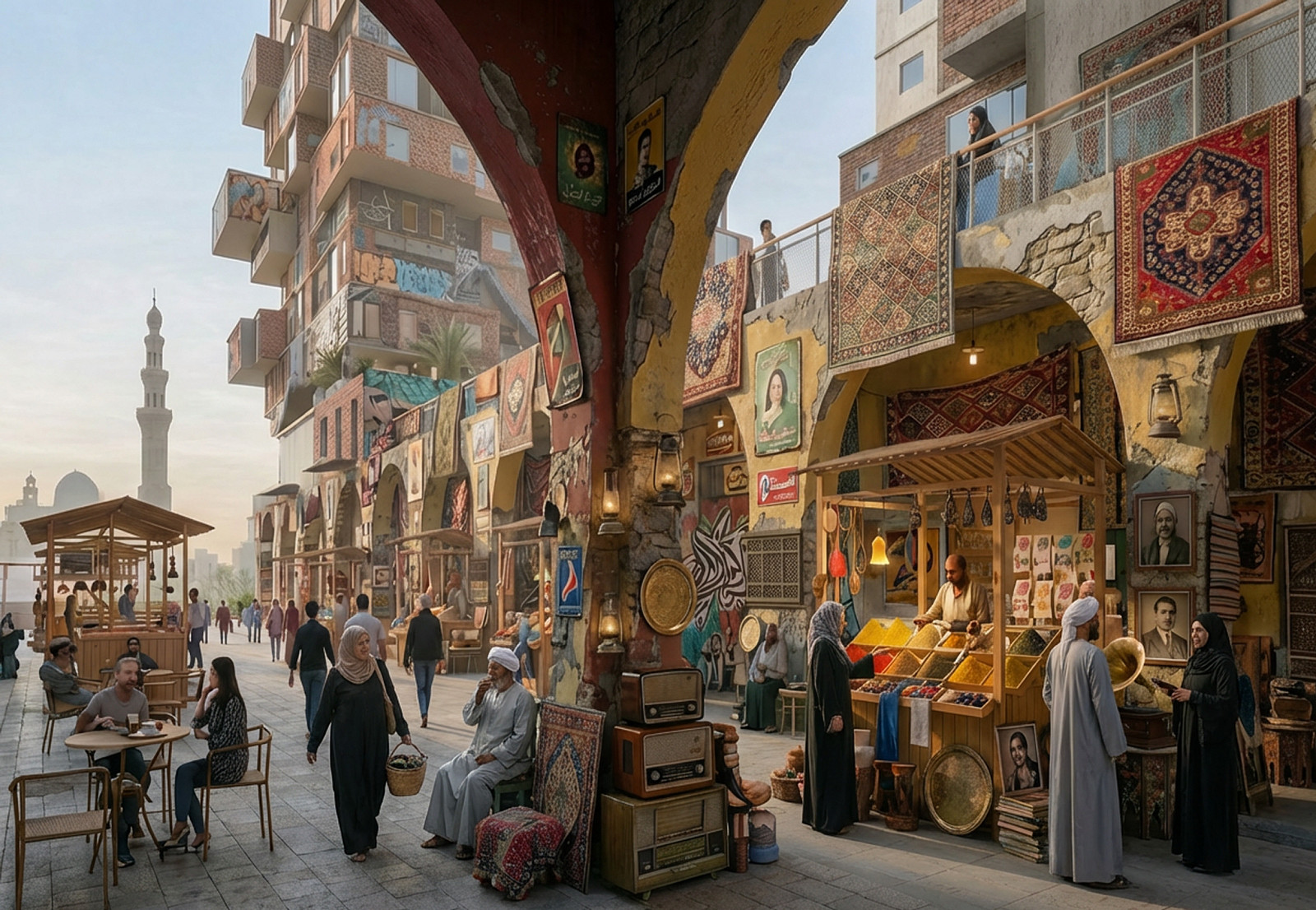
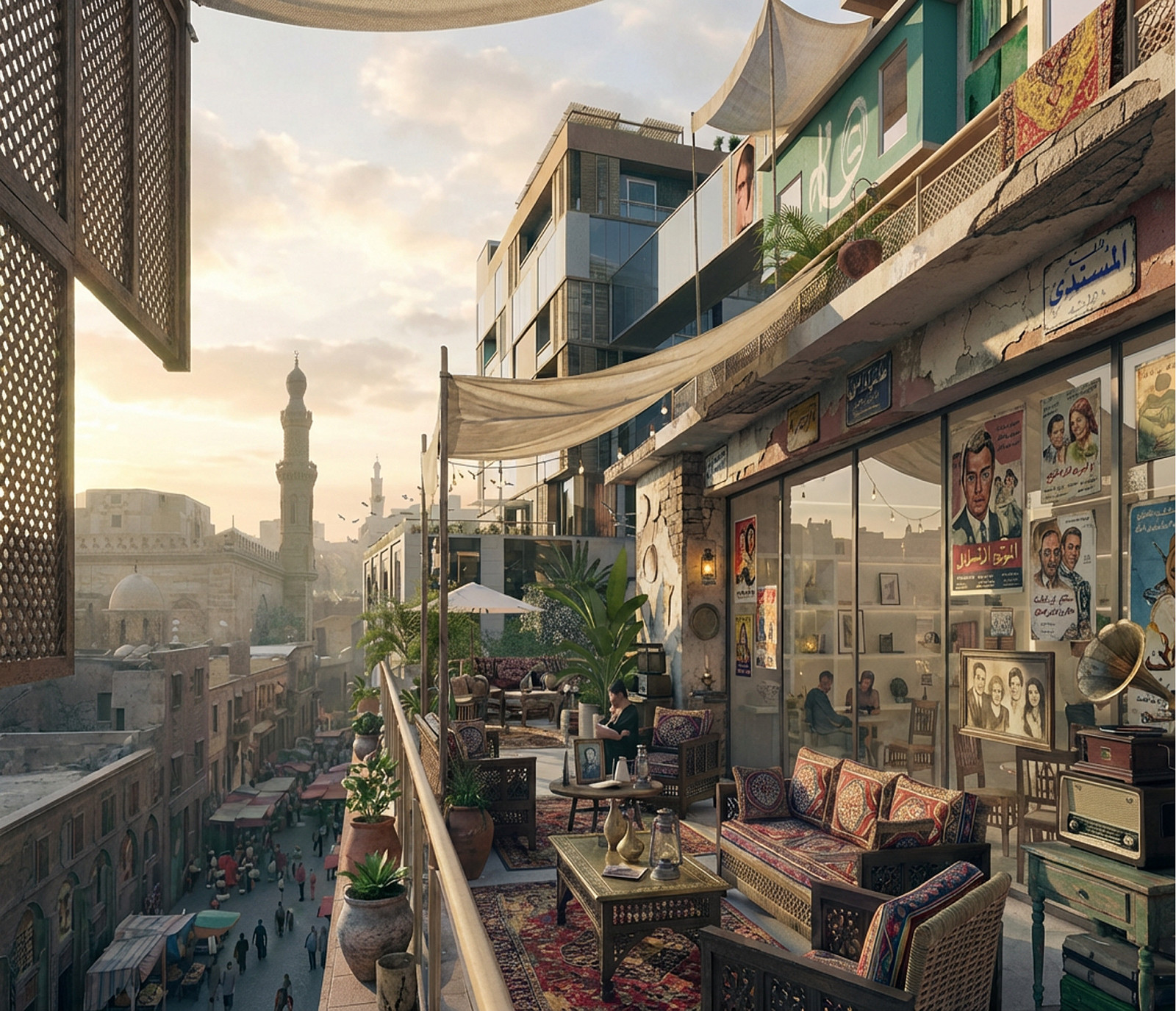
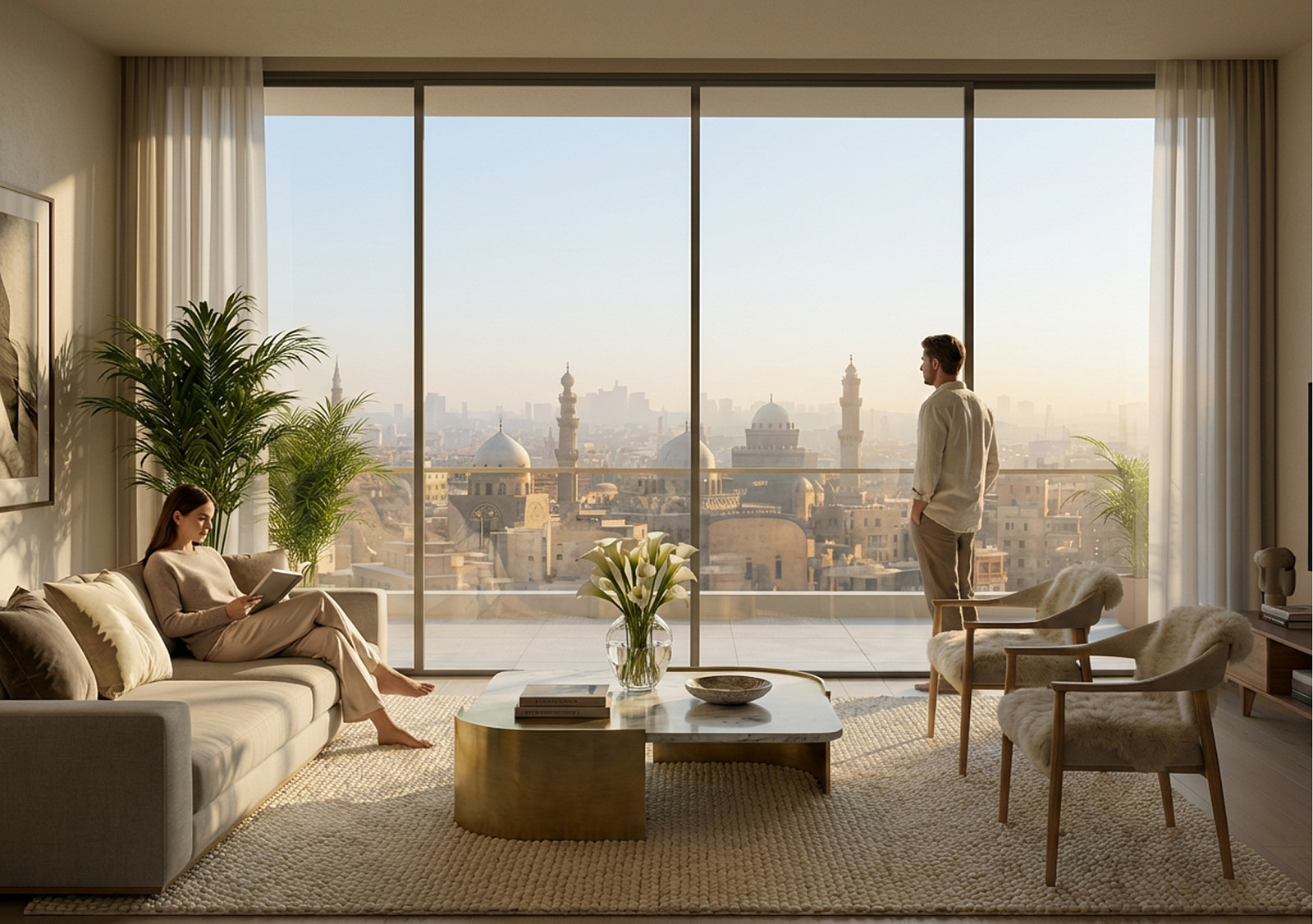
a refined, controlled contemporary language and a layered, adaptive informal fabric. Located along Al Moaz Street, one of Cairo’s most historically layered urban fabrics. The building is structured around two contrasting architectural identities connected through a shared spatial system. One wing offers calm, modern living defined by clarity, restraint, and controlled light. The other reflects the organic growth of Cairo’s unplanned fabric through stacked volumes, varied terraces, and social proximity. Between them lies a transitional zone a shared spatial spine where movement, commerce, and daily life overlap. The project consists of 2 lower commercial floors with librariy, cultural exhibitions, craft shops and workshops, retail shops, restaurants and cafes with the upper floors as different residential units. Ultimately, this project aims to understand Cairo and its dense layers.
Technické informace
The building is organized as a mixed structure composed of two contrasting architectural systems unified within a single mass. The structural grid follows a reinforced concrete frame with modular floor plates, allowing flexibility between planned and unplanned spatial arrangements. The left side adopts a rational structural rhythm supporting terraces, louvers, and regular façade modules, while the right side utilizes irregular infill, cantilevered volumes, and external circulation to reflect informal growth. A shared podium structurally connects both systems, enabling load transfer, circulation continuity, and functional integration. Material transitions, façade layering, and circulation elements are used to mediate between the two systems while maintaining structural clarity and efficiency.

Copyright © 2026 INSPIRELI | All rights reserved. Use of this website signifies your agreement to the Terms of Use, Privacy Policy, and use of cookies.